
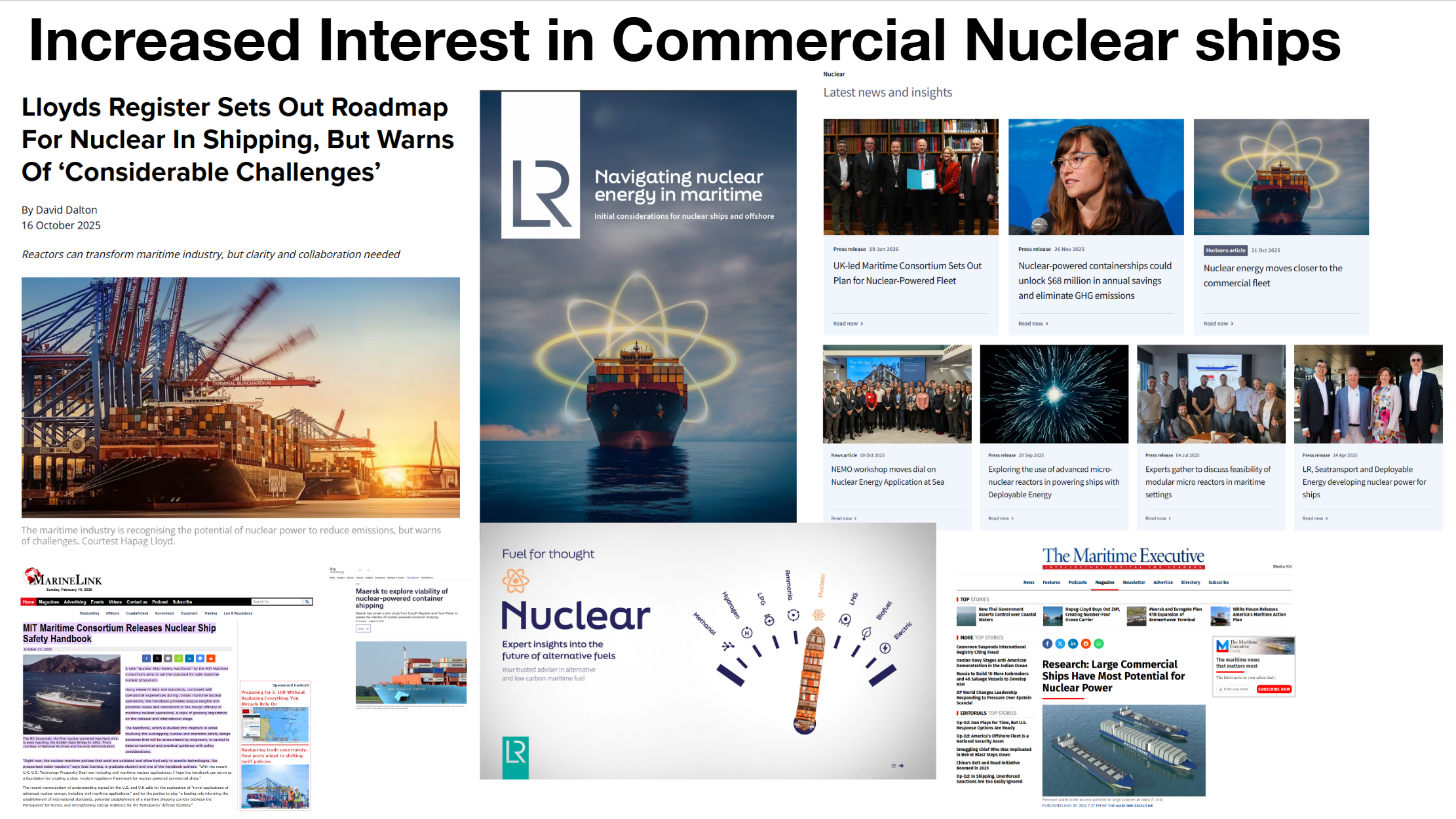
Reasoning behind the renewed interest in nuclear powered commercial ships
01
Lower and predictable operational cost
02
Long Endurance of commercial vessels and no need for bunkering services.
04
Reliable power
03
Higher power density of nuclear propulsion means cargo capacity is maintained or improved.
05
Effectively eliminates greenhouse gas emissions.
We have done this before!
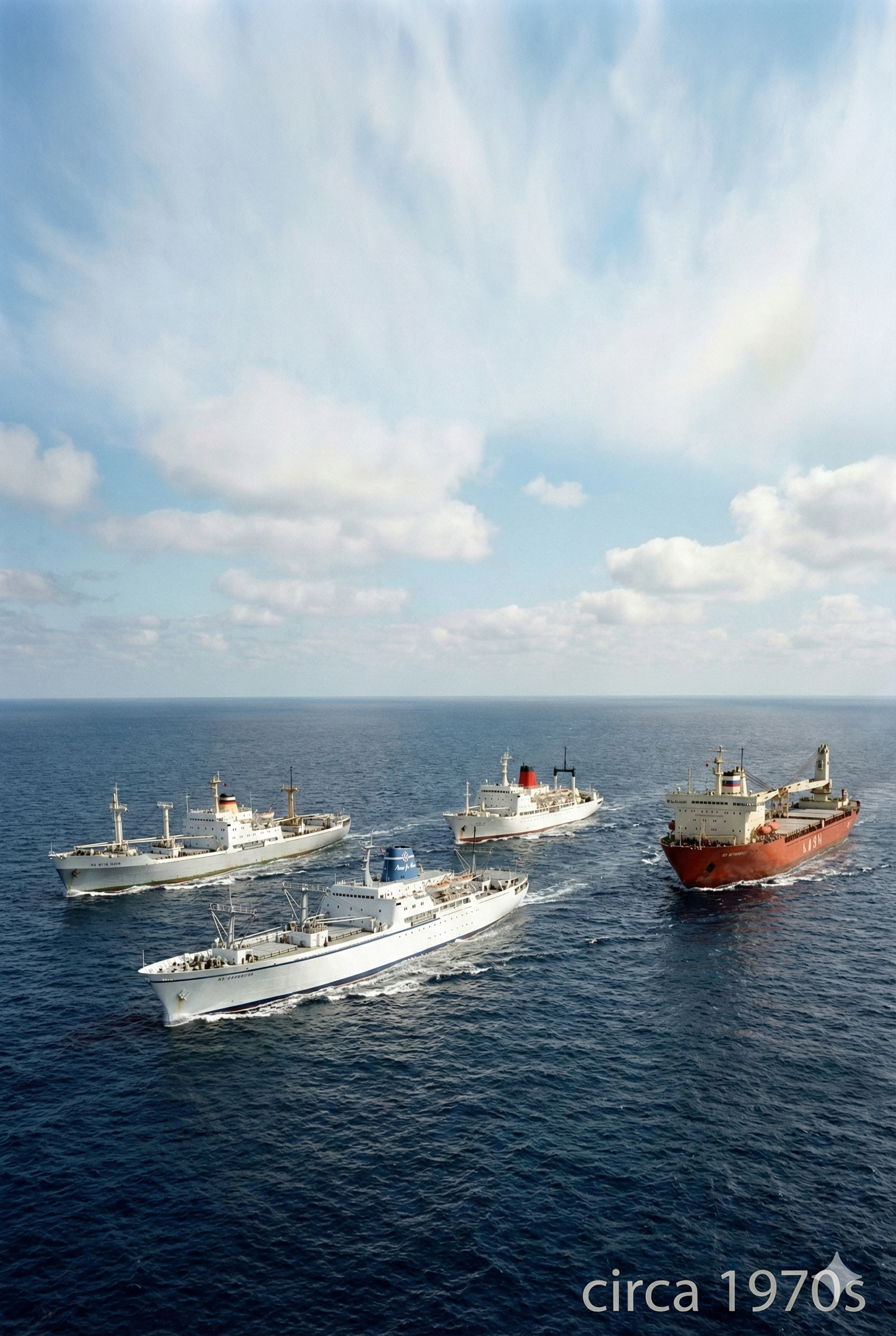
NS Savannah (USA, 1962–1972): The world's first nuclear-powered merchant ship and passenger-cargo vessel. Launched in 1959 under President Eisenhower’s "Atoms for Peace" program, it was a demonstrator project to show the potential for peaceful nuclear use.
NS Otto Hahn (Germany, 1968–1979): A cargo ship and research vessel that operated for over a decade. It was powered by an integrated pressurized water reactor (iPWR), which was a precursor to modern small modular reactor concepts. It successfully traveled over 650,000 nautical miles.
NS Mutsu (Japan, 1970–1992): Japan’s first nuclear ship. It was designed as a cargo ship but faced severe public opposition.
NS Sevmorput (USSR/Russia, 1988–present): An ice-strengthened LASH (Lighter Aboard Ship) carrier and container ship. It is the most successful of the commercial ships and has continued to operate, particularly along the Northern Sea Route.
Why did it not work?
These ships were unsuccessful, not because the technology failed, but because they were too expensive to build, maintain, and insure, especially when oil prices were low.
Additionally, many international ports were reluctant to allow nuclear-powered vessels to dock due to safety concerns and public anxiety.
Our Solution
We are developing a commercial nuclear vessel architecture that overcomes the challenges of the past using the latest technology and first principles engineering.